
Why Do I Shut Down During Conflict? Understanding The Freeze Response In Relationships
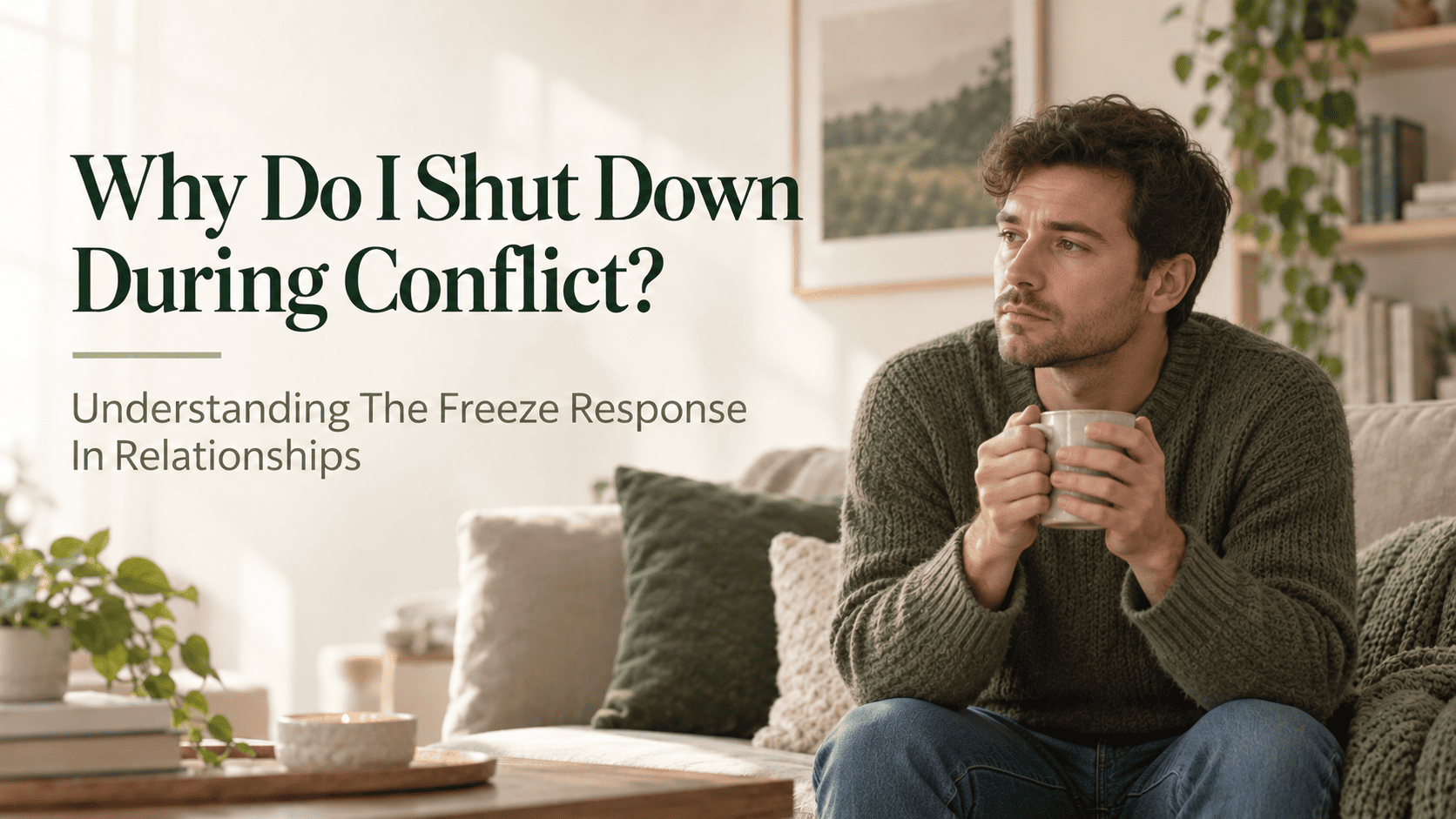
You are in the middle of an important conversation with your partner, and suddenly your mind goes blank. Your chest feels tight. You know you have thoughts and feelings, but you cannot seem to put them into words.
Later, when the argument is over, everything you wanted to say comes rushing back. You may wonder why you could not simply speak up when it mattered.
Shutting down during conflict can happen when your nervous system becomes overwhelmed by what it perceives as emotional danger. For some people, this resembles a freeze response. But trauma is not the only explanation. Emotional flooding, fear of rejection, learned communication patterns, attachment concerns, and difficulty processing intense emotions can all contribute.
Understanding what happens in those moments can help you recognize the pattern earlier and develop healthier ways to stay connected during difficult conversations.
What Does Shutting Down During Conflict Feel Like?
Emotional shutdown can look very different from the outside than it feels on the inside. A partner may see silence or withdrawal and assume you are refusing to communicate, while internally you may be struggling to think clearly at all.
Common signs include:
Your mind suddenly going blank
Difficulty finding words
Feeling numb or disconnected
Tightness in your chest or throat
Wanting to leave the conversation
Repeating "I don't know"
Feeling frozen or physically heavy
Agreeing just to make the argument stop
Some people also notice that they avoid eye contact or feel as though they are watching the conversation from a distance.
These reactions do not necessarily mean you do not care. In many cases, they signal that the emotional intensity of the conversation has exceeded what you can comfortably process in that moment.
Why Do I Shut Down During Conflict?
Conflict can activate the body's stress response even when there is no physical danger. Your nervous system responds to perceived threats, and emotional threats can feel powerful.
Criticism, anger, rejection, abandonment, humiliation, or the fear of making an argument worse may all create a sense that something important is at risk.
When this happens, your body may prepare to fight, escape, become still, or keep the peace. Understanding the broader fight, flight, freeze, and fawn responses can make these seemingly confusing reactions easier to recognize.
You Don't Have to Face It Alone
If you're feeling overwhelmed, anxious, or emotionally stuck, support is here. Take the first step toward greater clarity, healing, and calm with a therapist who understands your needs.
Book a Free 15-Minute Consultation
What Is The Freeze Response In Relationships?
The freeze response is one way the nervous system may react when a situation feels overwhelming or threatening. Instead of arguing back or leaving, you may become quiet, still, foggy, or disconnected.
In a relationship, this can happen very quickly. Your partner raises their voice, asks a difficult question, or expresses disappointment, and your body responds before you have fully decided what to say.
Freeze does not always look dramatic. It may simply feel like losing access to your thoughts. You may want to connect with your partner while simultaneously feeling unable to respond.
Why Does My Mind Go Blank During An Argument?
Clear communication requires attention, emotional awareness, memory, and language. During intense conflict, much of your attention may shift toward monitoring what feels threatening.
You may become focused on your partner's facial expression, tone of voice, whether they are becoming angrier, whether you are disappointing them, or whether saying the wrong thing will cause more conflict.
That leaves less mental space for organizing complex thoughts and emotions.
Why Do I Know What To Say After The Argument?
Once the emotional intensity decreases, clearer thinking often returns. You may suddenly remember details, understand what you were feeling, and know exactly how you wanted to respond.
This does not mean you were intentionally withholding your thoughts earlier. Your ability to communicate may simply improve when your nervous system feels calmer.
Developing ways to regulate your nervous system can make it easier to notice overwhelm before you reach complete shutdown.
What Can Cause Emotional Shutdown In Relationships?
There is rarely one explanation that fits everyone. Your current relationships, earlier experiences, temperament, stress level, and communication history may all influence how you respond to conflict.
Childhood Experiences With Conflict
If you grew up around frequent yelling, criticism, punishment, emotional unpredictability, or caregivers who withdrew affection during disagreements, staying quiet may have become associated with safety.
Some children also learn to keep the peace by hiding their feelings or avoiding disagreement. Those patterns can remain active in adult relationships even when the current situation is very different.
Fear Of Rejection Or Abandonment
A disagreement may feel like more than a disagreement if conflict becomes connected with fears of losing the relationship.
You may worry that expressing anger, disappointment, or a different opinion will cause your partner to reject you. Silence can then feel safer than risking disconnection.
Emotional Flooding
Emotional flooding happens when stress becomes so intense that it becomes difficult to think, listen, and respond effectively.
You might notice a racing heart, shallow breathing, muscle tension, shaking, warmth in your face, or a powerful urge to escape. Continuing to push through a complex argument while you are highly flooded may make productive communication even harder.
Fear Of Saying The Wrong Thing
Some people become quiet because they are trying desperately not to make the situation worse.
Thoughts such as "Whatever I say will be wrong" or "If I explain myself, they will get even angrier" can create so much pressure that saying nothing begins to feel like the safest choice.
Is Shutting Down Always A Trauma Response?
No. Trauma can contribute to emotional shutdown, but shutting down during conflict does not automatically mean that you have trauma.
Similar reactions can develop from anxiety, emotional flooding, attachment patterns, conflict avoidance, exhaustion, difficulty identifying emotions, family communication habits, or simply needing more time to process what you are feeling.
Rather than trying to immediately label the reaction, it may be more helpful to notice what happens before, during, and after you shut down.
Freeze Response Vs. Stonewalling: What's The Difference?
Freeze and stonewalling are related concepts, but they are not exactly the same.
A freeze response describes what may be happening within the body's stress system. Stonewalling describes a communication pattern where someone disengages, becomes silent, or stops participating in the conversation.
The two can overlap. Someone who feels emotionally flooded may appear to be stonewalling even though they are struggling to remain mentally present.
A healthy pause is different from repeatedly refusing to address an issue. Saying, "I'm overwhelmed and need 30 minutes, but I want to continue this conversation afterward" protects both regulation and connection.
Leaving without explanation and repeatedly refusing to return to important concerns can create a very different relationship pattern.
How Shutting Down Can Create A Conflict Cycle
Shutdown rarely affects only one person.
One partner may become quiet because they feel overwhelmed. The other experiences that silence as rejection and starts asking more questions or pushing for an immediate answer. That additional pressure increases overwhelm, which leads to even more withdrawal.
Soon, both partners feel unheard.
Healthier conflict is not about never becoming upset. It involves recognizing the cycle and developing ways to disagree without escalating it. Skills for arguing well in relationships can help couples focus on repair instead of winning.
How To Stop Shutting Down During Conflict
The goal is not to force yourself to stay in a conversation when you are completely overwhelmed. A more realistic goal is noticing your activation earlier and giving yourself more choices.
Notice Your Early Warning Signs
Pay attention to what happens before your mind completely blanks.
You might notice your chest tightening, breathing becoming shallow, jaw clenching, thoughts becoming foggy, or a strong urge to escape.
Recognizing these signals earlier gives you more opportunity to respond before reaching full shutdown.
Tell Your Partner What Is Happening
Naming the experience can reduce confusion.
You might say, "I'm getting overwhelmed and having trouble thinking clearly. I care about this conversation, but I need a little time."
That communicates something very different from simply becoming silent.
Take A Structured Pause
A break works best when both partners know that the conversation will continue.
Instead of walking away indefinitely, agree on a specific time to reconnect. During the break, focus on settling your body rather than mentally continuing the argument.
Slow breathing, walking, grounding yourself through your senses, relaxing tense muscles, or sitting somewhere quiet may help.
Return To The Conversation
Coming back matters.
When you consistently return after taking space, your partner can begin to trust that a pause does not mean abandonment or avoidance.
You also give yourself evidence that you can experience difficult emotions without having to disappear from the relationship.
If Your Partner Shuts Down During Conflict
When someone shuts down, pressing harder for an immediate answer may unintentionally make it more difficult for them to respond.
Lowering your voice, asking one question at a time, and allowing reasonable processing time can help reduce pressure.
That does not mean your needs should disappear. A pause should still include an agreement to return to the concern. Both people deserve the opportunity to feel heard.
When Conflict Is About Safety
Sometimes shutting down happens because a relationship genuinely feels unsafe.
If conflict includes threats, intimidation, humiliation, controlling behavior, coercion, or physical aggression, the main issue may not be improving your conflict communication skills. Your emotional and physical safety deserves priority.
It is important to distinguish nervous system overwhelm during ordinary relationship conflict from reactions that occur in an abusive or threatening environment.
How Therapy Can Help With Shutting Down During Conflict
Therapy can help you understand what triggers shutdown, recognize your body's early warning signs, and practice staying connected to your emotions without becoming overwhelmed.
Different approaches may be useful depending on what contributes to the pattern. Somatic approaches can increase awareness of body responses, IFS may help explore protective parts that withdraw during conflict, and EMDR may be appropriate when unresolved past experiences are strongly influencing present reactions.
When the shutdown has become part of a repeating relationship cycle, couples therapy can help both partners understand what is happening and develop safer ways to communicate.
You Don't Have to Face It Alone
If you're feeling overwhelmed, anxious, or emotionally stuck, support is here. Take the first step toward greater clarity, healing, and calm with a therapist who understands your needs.
Book a Free 15-Minute Consultation
Support For Relationship Conflict At Calm Again Counseling
Calm Again Counseling provides trauma-informed, evidence-based therapy for adults and couples who want to better understand emotional reactions, relationship patterns, and experiences that continue to affect the present.
Therapy is individualized rather than based on one approach for everyone. Depending on your needs, treatment may include couples therapy, EMDR, IFS, Somatic Experiencing, CBT, or other supportive approaches.
Our therapist-matching process also helps connect you with a clinician whose approach, preferences, and therapeutic style fit what you are looking for.
In-person therapy is available in Noe Valley, San Francisco, with online therapy available to California residents. You can begin by scheduling a FREE 15-minute consultation.
Frequently Asked Questions
Is Shutting Down During Conflict A Trauma Response?
It can be, especially when previous experiences have taught your nervous system that conflict is unsafe. However, anxiety, emotional flooding, attachment fears, communication habits, and needing additional processing time can also contribute.
Why Do I Go Silent When Someone Is Angry With Me?
Anger may activate fear of rejection, criticism, escalation, or losing connection. When the emotional intensity becomes overwhelming, silence may feel safer than trying to respond immediately.
Is Shutting Down The Same As Stonewalling?
Not necessarily. Shutdown may involve an internal stress response, while stonewalling describes withdrawing from communication. They can overlap, but intention, emotional state, and whether the person returns to the conversation all matter.
Why Do I Think Of Everything I Wanted To Say Later?
Your thinking may become clearer after emotional activation decreases. Once your body feels safer, it may be easier to organize your thoughts, identify your feelings, and find the words you wanted earlier.
How Can I Stop Freezing During Arguments?
Start by noticing early signs of overwhelm, naming what is happening, taking a structured pause when needed, and returning to the conversation once you feel more regulated. Therapy can also help when shutdown happens frequently or feels difficult to change.
Can Couples Therapy Help With Emotional Shutdown?
Yes. Couples therapy can help both partners understand the interaction cycle behind shutdown, reduce escalation, communicate needs more clearly, and develop healthier ways to pause and reconnect during conflict.
Shutting down during conflict does not have to be your only option. With greater awareness, emotional regulation, and support, you can work toward staying connected to yourself while communicating more clearly with the people who matter to you.
Book a FREE 15-minute consultation with Calm Again Counseling to get matched with a therapist who fits your needs.
